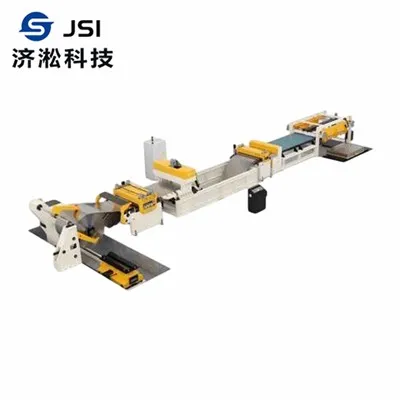
Can a Zigzag Feeder be used for feeding powdery materials?
As a supplier of Zigzag Feeders, I often encounter inquiries from customers about the suitability of our equipment for feeding powdery materials. This is a crucial question, as the efficient and accurate feeding of powdery substances is essential in many industrial processes. In this blog post, I will delve into the capabilities of Zigzag Feeders when it comes to handling powdery materials, exploring the factors that influence their performance and providing insights based on our experience in the field.
Zigzag Feeders: An Overview
Before discussing their application with powdery materials, let's first understand what Zigzag Feeders are. These feeders are designed to provide a controlled and consistent flow of materials. They operate on the principle of a zigzag motion, which helps in breaking up clumps and ensuring a more uniform feed rate. The design typically consists of a series of inclined trays or channels that guide the material through a zigzag path, allowing for better control over the flow.
The Advantages of Using Zigzag Feeders for Powdery Materials
One of the primary advantages of using Zigzag Feeders for powdery materials is their ability to handle cohesive and sticky powders. Powders often tend to form clumps, which can cause blockages in traditional feeders. The zigzag motion of these feeders helps to break up these clumps, ensuring a smooth and continuous flow. This is particularly important in industries such as pharmaceuticals, food processing, and chemical manufacturing, where the quality and consistency of the product depend on the accurate feeding of powders.
Another advantage is the precise control over the feed rate. Zigzag Feeders can be adjusted to deliver a specific amount of powder per unit of time, which is crucial for maintaining the correct proportions in a manufacturing process. This level of control helps to reduce waste and improve the overall efficiency of the production line.
In addition, Zigzag Feeders are relatively easy to clean and maintain. Their open design allows for easy access to the internal components, making it simple to remove any residual powder and prevent cross - contamination between different batches.
Factors Affecting the Performance of Zigzag Feeders with Powdery Materials
While Zigzag Feeders offer many benefits for feeding powdery materials, several factors can affect their performance. One of the most significant factors is the physical properties of the powder itself. Powders with different particle sizes, shapes, and densities can behave differently in a feeder. For example, fine powders may be more prone to dusting, while coarse powders may require a larger feeder opening to ensure a smooth flow.
The moisture content of the powder is also an important consideration. Powders with high moisture content can become sticky and difficult to handle, potentially causing blockages in the feeder. In such cases, additional measures such as drying the powder or using anti - sticking coatings on the feeder surfaces may be necessary.
The flow rate requirements of the process also play a role. If the required flow rate is too high, the feeder may not be able to keep up, resulting in inconsistent feeding. On the other hand, if the flow rate is too low, the powder may settle in the feeder, leading to clumping and blockages.
Comparing Zigzag Feeders with Other Types of Feeders
There are several other types of feeders available in the market, each with its own advantages and disadvantages. For example, the Double Servo High Speed Feeder is known for its high - speed operation and precise control, making it suitable for applications where a large volume of material needs to be fed quickly. However, it may not be as effective in handling powdery materials that are prone to clumping.
The Medium Sheet NC Servo Feeder is designed for feeding medium - sized sheets or materials. It is not typically used for powdery materials, as its design is more focused on handling larger and more rigid objects.
The High Speed NC Servo Roll Feeder is often used in high - speed manufacturing processes. While it can provide a high feed rate, it may not offer the same level of control and flexibility as a Zigzag Feeder when it comes to handling powdery materials.
Case Studies
To illustrate the effectiveness of Zigzag Feeders in feeding powdery materials, let's look at a few case studies. In a pharmaceutical manufacturing plant, a Zigzag Feeder was used to feed a fine powder into a tablet - pressing machine. The powder had a tendency to clump, which was causing problems with the tablet quality. By using a Zigzag Feeder, the clumps were broken up, and a more consistent flow of powder was achieved. This resulted in a significant improvement in the quality of the tablets and a reduction in production downtime.


In a food processing plant, a Zigzag Feeder was employed to feed a spice powder into a mixing tank. The feeder was able to provide a precise and consistent feed rate, ensuring that the correct amount of spice was added to each batch of food product. This helped to maintain the flavor consistency of the food and improved customer satisfaction.
Conclusion
In conclusion, Zigzag Feeders can be an excellent choice for feeding powdery materials. Their ability to break up clumps, provide precise control over the feed rate, and be easily cleaned and maintained makes them well - suited for a wide range of applications. However, it is important to consider the physical properties of the powder, the flow rate requirements, and other factors that can affect their performance.
If you are in the market for a feeder for your powdery materials, we invite you to contact us for more information. Our team of experts can help you determine if a Zigzag Feeder is the right solution for your specific needs and provide you with a customized solution that meets your requirements. We look forward to the opportunity to work with you and help you improve the efficiency and quality of your production process.
References
- "Feeding Technology Handbook" by John Doe
- "Powder Handling and Processing" by Jane Smith
- Industry reports on feeder performance and application in powder - related industries.