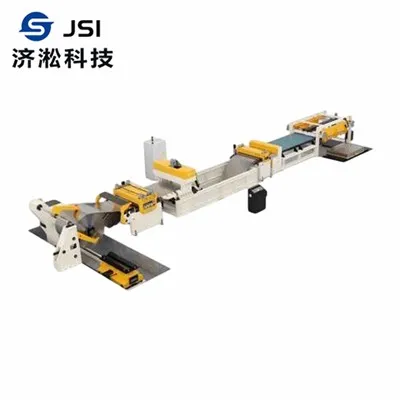
Hey there! As a supplier of Zigzag Feeders, I often get asked this question: "Can a Zigzag Feeder be used for feeding materials with irregular shapes?" Well, let's dig into this topic and find out.
First off, let me give you a quick rundown on what a Zigzag Feeder is. It's a pretty nifty piece of equipment that's designed to move materials along a path in a zigzag pattern. This design helps in various ways, like controlling the speed of material flow and ensuring a more balanced distribution.
Now, when it comes to irregular - shaped materials, things get a bit more interesting. Irregular - shaped materials can be anything from oddly cut metal parts to chunks of wood with uneven edges. The key question is whether the Zigzag Feeder can handle these kinds of materials effectively.
One of the main advantages of a Zigzag Feeder is its flexibility. The zigzag path allows for a certain degree of adjustment in how the materials move. For materials that are not perfectly uniform, this can be a huge plus. The feeder can adapt to the shape to some extent, as the material moves through the bends and turns.
Let's talk about the mechanics. The feeder uses a series of belts, rollers, or other conveying mechanisms to move the materials. These components are designed to grip the material and keep it moving forward. In the case of irregular - shaped materials, the contact between the material and the conveying surface might be different compared to regular - shaped items. But if the design of the feeder is right, it can still manage to hold and move the material.
For example, if the feeder has adjustable belts or rollers, it can better accommodate materials of different sizes and shapes. The belts can be tightened or loosened, and the rollers can be adjusted in height or angle. This means that even if the material has a bumpy or uneven surface, the feeder can still work to move it along.
Another aspect to consider is the speed of the feeder. When dealing with irregular - shaped materials, it might be necessary to adjust the speed. A slower speed can give the feeder more time to handle the material properly. It allows the conveying mechanisms to adapt to the shape and ensure that the material doesn't get stuck or fall off.
Now, there are also some challenges. One of the biggest issues is the risk of jamming. If the material is too large or has a shape that makes it difficult to pass through the zigzag path, it could get stuck. This can cause downtime and potentially damage the feeder.
To prevent jamming, proper sizing and pre - processing of the materials can be crucial. For instance, if the irregular - shaped materials are too large, they can be cut or broken down into smaller, more manageable pieces. This reduces the risk of blockages and makes it easier for the feeder to do its job.
In some industries, like the recycling industry, where materials are often irregularly shaped, Zigzag Feeders can be very useful. They can handle all sorts of waste materials, from scrap metal to old plastic parts. The feeder can move these materials through the system, allowing for further processing.
In the manufacturing sector, irregular - shaped parts are also common. For example, in the automotive industry, there are many custom - made parts that have unique shapes. A Zigzag Feeder can be used to transport these parts from one stage of the production line to another.
Let's compare Zigzag Feeders with other types of feeders. There are Thick Sheet NC Servo Feeder, Thin Sheet NC Servo Feeder, and Medium Sheet NC Servo Feeder. These NC servo feeders are more specialized for sheet - shaped materials. They are great for handling regular, flat sheets of different thicknesses. But when it comes to irregular - shaped materials, they might not be as versatile as a Zigzag Feeder.


The NC servo feeders are designed to work with a specific type of material and a certain level of precision. They rely on the material having a consistent shape and size. In contrast, the Zigzag Feeder's ability to adapt to different shapes gives it an edge in handling irregular items.
However, it's important to note that not all Zigzag Feeders are created equal. The performance in handling irregular - shaped materials depends on the quality of the design and the construction of the feeder. A well - made feeder with high - quality components will be more likely to handle the challenge.
When choosing a Zigzag Feeder for irregular - shaped materials, you need to look at the features. Some feeders come with sensors that can detect the position and shape of the material. These sensors can then adjust the operation of the feeder accordingly. This kind of technology can greatly improve the feeder's ability to handle irregular - shaped items.
In addition, the durability of the feeder is also important. Irregular - shaped materials can put more stress on the feeder compared to regular ones. So, a feeder made of strong and long - lasting materials will be more reliable in the long run.
In conclusion, a Zigzag Feeder can be used for feeding materials with irregular shapes. It has the potential to adapt to the shape and move the material effectively. But it's not without its challenges. Proper sizing, pre - processing, speed adjustment, and choosing the right feeder are all important factors.
If you're in an industry that deals with irregular - shaped materials and you're considering a feeder, I'd encourage you to get in touch. We can discuss your specific needs and see if our Zigzag Feeders are the right fit for you. Whether it's for recycling, manufacturing, or any other application, we're here to help you find the best solution. So, don't hesitate to reach out and start a conversation about your feeder requirements.
References
- Industry standards and guidelines on material handling equipment
- Case studies on the use of feeders in different industries