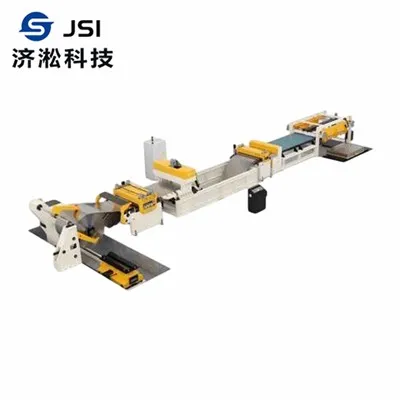
In the realm of metal processing, the straightening of thick sheets is a critical operation that significantly impacts the quality and usability of the final product. As a leading supplier of Thick Sheet Straightener, we have witnessed firsthand the importance of understanding how various factors influence the straightening process. One such factor that often goes unnoticed but plays a crucial role is the sheet length. In this blog post, we will delve into the intricate relationship between sheet length and the straightening process of a thick sheet straightener, exploring its effects on performance, quality, and efficiency.


Understanding the Basics of Thick Sheet Straightening
Before we dive into the impact of sheet length, it's essential to understand the fundamental principles of thick sheet straightening. A thick sheet straightener is a specialized machine designed to remove the curvature, waviness, and other deformities from thick metal sheets. The straightening process typically involves passing the sheet through a series of rollers that apply controlled pressure to reshape the sheet and restore its flatness.
The effectiveness of the straightening process depends on several factors, including the material properties of the sheet, the thickness of the sheet, the roller configuration of the straightener, and the applied pressure. However, the length of the sheet also plays a significant role in determining the success of the straightening operation.
Effects of Sheet Length on the Straightening Process
1. Roller Contact and Pressure Distribution
One of the primary ways in which sheet length affects the straightening process is through its impact on roller contact and pressure distribution. When a thick sheet is fed into the straightener, the rollers come into contact with the sheet at specific points along its length. The longer the sheet, the more contact points there are between the rollers and the sheet, which can lead to more even pressure distribution and better straightening results.
However, if the sheet is too long, it may cause uneven pressure distribution, especially if the straightener's rollers are not properly adjusted. Uneven pressure can result in localized deformation, such as waves or twists, in the sheet. Therefore, it's crucial to ensure that the straightener's rollers are adjusted correctly to accommodate the length of the sheet being processed.
2. Material Stiffness and Resistance
Another factor that is influenced by sheet length is the material stiffness and resistance of the sheet. Longer sheets tend to be stiffer and more resistant to bending and straightening compared to shorter sheets. This is because the longer the sheet, the more material there is to resist the applied force from the rollers.
As a result, straightening longer sheets may require more force and energy compared to shorter sheets. This can put additional stress on the straightener's rollers and drive system, potentially leading to increased wear and tear and reduced machine lifespan. Therefore, it's important to consider the material stiffness and resistance of the sheet when determining the appropriate straightening parameters for a given sheet length.
3. Feed Speed and Throughput
Sheet length also affects the feed speed and throughput of the straightening process. Longer sheets typically require a slower feed speed to ensure proper straightening, as the rollers need more time to apply the necessary pressure and reshape the sheet. This can result in lower throughput and reduced productivity compared to shorter sheets.
However, some modern thick sheet straighteners are equipped with advanced control systems that can automatically adjust the feed speed based on the length of the sheet being processed. These systems can optimize the straightening process and improve throughput without compromising the quality of the straightened sheet.
4. Quality and Consistency
The length of the sheet can also have a significant impact on the quality and consistency of the straightened sheet. Longer sheets are more prone to variations in thickness, material properties, and curvature along their length, which can make it more challenging to achieve consistent straightening results.
To ensure high-quality and consistent straightening, it's important to perform regular quality checks during the straightening process and make any necessary adjustments to the straightener's settings. Additionally, using a straightener with advanced control features, such as automatic thickness compensation and real-time monitoring, can help to minimize variations and improve the overall quality of the straightened sheet.
Strategies for Optimizing the Straightening Process for Different Sheet Lengths
1. Roller Adjustment
As mentioned earlier, proper roller adjustment is crucial for achieving optimal straightening results, especially when processing sheets of different lengths. It's important to ensure that the rollers are adjusted to the correct height, spacing, and pressure to accommodate the length and thickness of the sheet being processed.
Regular maintenance and calibration of the straightener's rollers can help to ensure that they are in good working condition and provide consistent performance. Additionally, using a straightener with adjustable rollers, such as the Straightener-top Flip Up, can provide greater flexibility and control over the straightening process.
2. Material Handling
Proper material handling is also essential for optimizing the straightening process for different sheet lengths. Longer sheets may require additional support and guidance during the feeding process to prevent sagging or bending, which can affect the straightening results.
Using a material handling system, such as a conveyor or a feeder, can help to ensure that the sheet is fed into the straightener smoothly and evenly. Additionally, using a straightener with a built-in support system, such as a back-up roll or a guide rail, can provide additional support and stability for longer sheets.
3. Process Optimization
Finally, process optimization is key to achieving the best possible straightening results for different sheet lengths. This may involve adjusting the feed speed, roller pressure, and other process parameters based on the length and material properties of the sheet being processed.
Using a straightener with advanced control features, such as a programmable logic controller (PLC) or a human-machine interface (HMI), can provide greater flexibility and control over the straightening process. These systems can allow operators to easily adjust the process parameters and monitor the straightening operation in real-time, ensuring optimal performance and quality.
Conclusion
In conclusion, the length of the sheet plays a significant role in the straightening process of a thick sheet straightener. It affects roller contact and pressure distribution, material stiffness and resistance, feed speed and throughput, and the quality and consistency of the straightened sheet. By understanding these effects and implementing the appropriate strategies for optimizing the straightening process for different sheet lengths, manufacturers can achieve better straightening results, improve productivity, and reduce costs.
As a leading supplier of Thick Sheet Straightener, we are committed to providing our customers with the highest quality straightening equipment and solutions. Our Coil Stock Straightener is designed to handle a wide range of sheet lengths and thicknesses, and our advanced control systems ensure optimal performance and quality.
If you are interested in learning more about our thick sheet straighteners or need assistance with your straightening process, please contact us. Our team of experts is ready to help you find the right solution for your specific needs and requirements.
References
- "Metal Forming Handbook: Processes and Applications" by G. E. Dieter
- "Manufacturing Engineering and Technology" by S. Kalpakjian and S. R. Schmid
- "Roll Forming Technology: Design, Analysis, and Application" by J. P. Davim